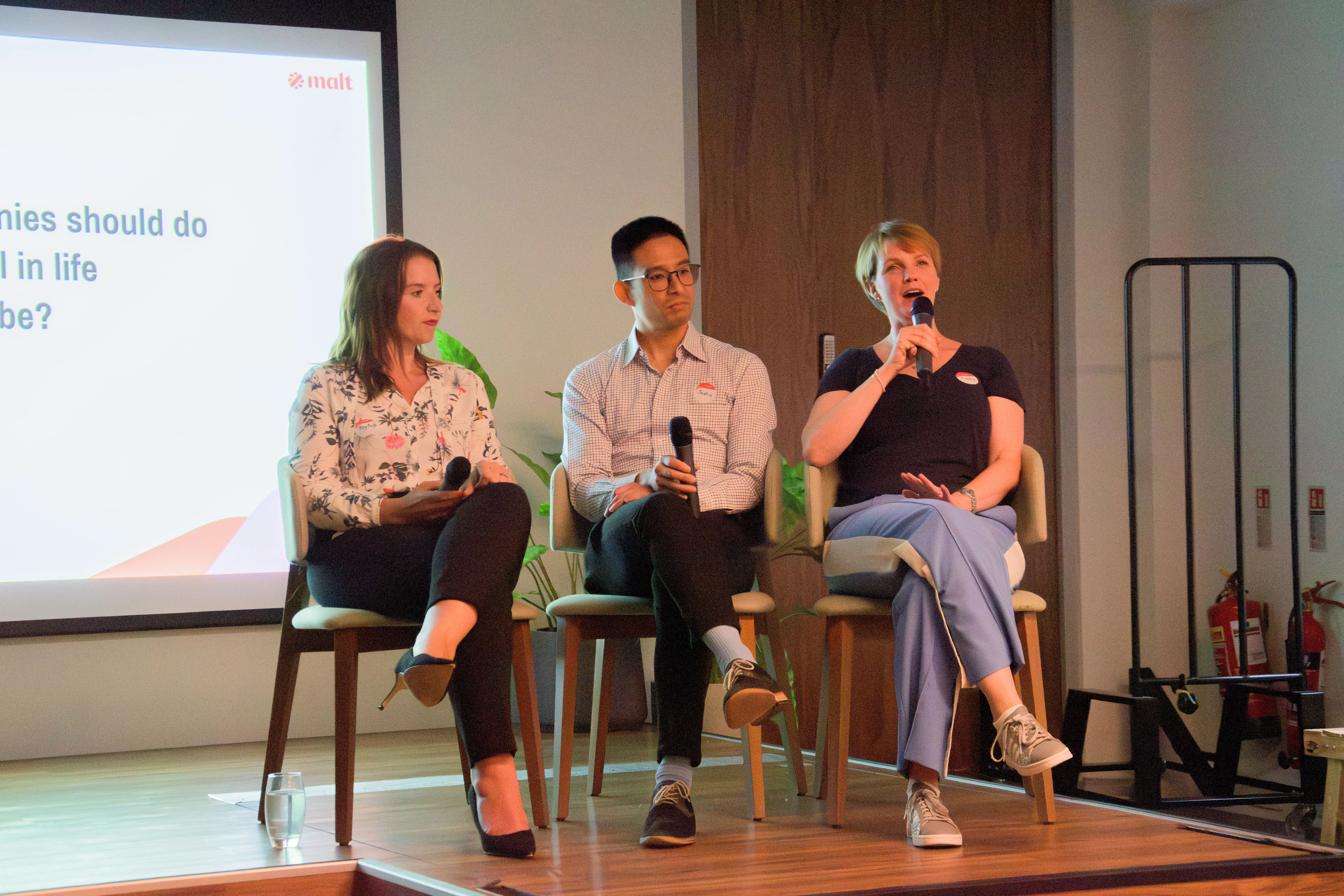
We were joined by Elizabeth Shanahan (AI Strategy Lead at Sanofi), Kayleigh McGrail (Procurement Lead at BD), independent consultant, AI strategist and UCL Professor Justin Tan, and Luke Mould, Malt’s Senior KAM Life Sciences. Together they discussed what’s really happening on the ground: the promise of AI, the reality of implementation, and where freelancers can make a difference.
A few themes stood out.
First, AI is already reshaping how people work, but not always in the ways you’d expect.
Panelists described using AI-powered copilots in their daily roles, from writing emails to streamlining internal workflows. The tools are there, and many employees are experimenting with them already, but that doesn’t mean their organisations are ready to scale. Regulatory constraints, unclear governance structures and internal hesitancy still make wider adoption difficult.
Second, there’s no one-size-fits-all approach.
AI adoption depends heavily on context: the organisation, team culture, even the country. One example showed how a tool built for oncologists proved more effective with nurses, who were closer to patient data and more open to trying new tech. This kind of insight is exactly where freelancers can bring value. Unlike internal teams, who may be closely tied to existing workflows or decision hierarchies, freelancers bring fresh eyes and a broader cross-industry perspective, helping teams spot better fits and challenge assumptions that often go unquestioned.
Third, the skills gap is real, and highly experienced freelancers are part of the solution.
One of the clearest takeaways was how critical external expertise has become. Freelancers are being brought in not just for their technical skills, but crucially to help bridge understanding between teams, offer fresh thinking, and leave behind a legacy that empowers in-house teams long after a project ends.
As one speaker put it:
And finally, everyone agreed: we need to move beyond layering AI on top of old ways of working.
AI can’t just be bolted onto existing processes - it needs to be integrated thoughtfully, and that requires rethinking how teams work together. Change management, trust, and cross-functional alignment are just as important as having the right model or tech platform.
The tone of the event was candid and collaborative. Panelists spoke frankly about internal resistance, competing priorities, and the challenge of convincing senior leaders to invest in something that doesn’t deliver immediate ROI. But they also expressed optimism, particularly about the role freelancers can play in helping companies navigate this transition with agility, creativity, and empathy.