Writing and translating

Generative AI has entered the chat. Writers and journalists haven’t left - quite the opposite. Right now, we need original perspectives, original work, and human expertise more than ever. I’ve spent the last 10 years working in communication, journalism, writing, and marketing, so I count myself among them. 

Perhaps you’ve heard others say it: “Generative AI is replacing your job.” 

As far as I’m concerned, that simply isn’t true. While I believe in curiosity and continuous learning, I also believe that I know my craft. With a Master's in Danish and Creative writing, and more than a decade of experience as a writer, journalist, and copywriter, I’m confident in speaking on this subject.

Let me show you what I mean. If you think GenAI will take jobs from journalists and writers, you are sorely mistaken: GenAI is a tool - not the end-all, be-all. Are there situations where GenAI, or AI-supported translation, can be helpful? Absolutely. And I've got a great example to prove it.

GenAI is a tool - not the end-all, be-all solution."

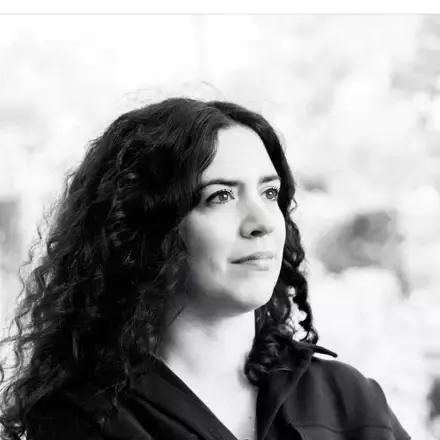
Sofie Korenko Jensen

Sofie Korenko Jensen

How GenAI can be a helpful tool

The very first project I ever worked on through Malt is a great example. The client, utopiaweb (today called Codestible), had created their own website in French from scratch: original texts with their own concept, landing pages etc. They wanted to launch their website in Danish, and they started out by machine-translating it.

Now, some companies would settle there, thinking that's enough. But they wanted to go further.

They looked for an expert to go over the Danish site and perfect the translation. They wanted someone who had the right expertise to produce a site with great SEO - including editing, proofreading, and producing additional content - all tailored to the Danish market.

They decided to take me on for the project. 

It makes sense why so many companies have adopted GenAI tools - they save a lot of time. They can also help experts work more efficiently, since we don’t need to do the entire job from start to finish, and can focus on more strategic tasks.

For example, my client didn’t ask me to translate the website from A to Z - the tool had already done that. My job was to proofread, edit, rewrite, and, of course, fact-check. Because I didn’t have to translate the entire site, I also had time to suggest new content tailored to the Danish audience. 

If they had published the site without expert input, it might have attracted visitors - but not trust. The auto-translated version included names that were misspelled or incorrectly translated. Culturally, Danes hold the written word in high regard and will hesitate to trust any merchant who butchers the language. 

This is the kind of GenAI use I can get behind: build your own website with your own text, let GenAI or AI-supported translation handle the first pass – but don’t consider the job done. Hire a real translator, writer, or journalist, a true expert, to go over it. 

It is important to ask yourself these questions:

  • What is missing? 

  • What needs to be rewritten? 

  • What works and doesn’t work in this specific language and culture? 

That's the real value: GenAI provides a starting point - it’s a tool, not the solution, and certainly not the final result. It's the experts like me who can build on that foundation to elevate the work to the next level.

Empathy requires authenticity 

In my career of writing, translation, SEO, communications strategy, and fun marketing initiatives such as social media and newsletters, I have developed an extensive toolbox. 

In addition to working in journalism, communication and marketing, I am also an author. In September 2025 my debut novel - Sorte hemmeligheder (meaning Dark Secrets in English) - will hit the bookshelves in Denmark. It's the first book in a series I've designed around a psychology-driven, high fantasy world.

Working with my editor, I've learned that several publishing houses - including the one I’m a part of - have distanced themselves from GenAI.

In Denmark, one article explored how some publishing houses are open to experimenting with GenAI, although many still don’t really trust it with full writing capabilities. They're unsure how the models are trained, or where the information comes from – and because of that, they can't guarantee GenAI-generated content is free from plagiarism or copyright issues. 

Other publishers argue that GenAI simply can’t replace the empathy and creativity that go into writing a book, especially fiction. I believe that too: empathy can be mimicked, but either you feel it or you don’t, and readers will know the difference. 

These publishers want to publish stories, covers, maps, and illustrations created by people – a stance I fully support. Because that, in the end, is what art and culture are meant to be: created by humans for humans with all our flaws, emotions, and different perspectives. 

If you sum up the publishing world's position, it's clear: GenAI has not been widely embraced in the literary community. Not for storytelling, and not for translation either. When you don’t translate and localize correctly, you risk losing context, nuance, tone and the entire magic of the story. Worse, you can introduce new misunderstandings entirely.

Take metaphors, for example: what's beautiful in one language, might not survive word-for-word translation. It might land as clumsy, insensitive, or fall flat if it loses the humour or rhythm it had in the original. An expert will spot this, rewrite it in a way that works for the target audience, and preserve the core message - all while staying articulate and engaging.

When you use GenAI, it's important to consider how you use it, why you're using it – and at what cost."

Sofie Korenko Jensen

Sofie Korenko Jensen

Time saved is money earned - but it comes at a cost 

When you use GenAI, it's important to consider how you use it, why and at what cost. As Sir Isaac Newton once said, for every action, there is an equal and opposite reaction. GenAI may be all the rage now, but like any major shift, it will inevitably bring consequences. Trends come and go. Just think how different beauty standards were in the 1990s and 2000’s to today. We simply don't know how GenAI will evolve, or where it will take us in the coming decades.

Every time-saving tool has a cost, and it's not just counted in euros. As a society, we haven't yet begun to fully understand the shadow side of our use of GenAI. These tools are trained on a vast volume of content about ever our society - the good, but also the bad. And there's also the heavy environmental impact of the massive data centers needed to power them, consuming exponential amounts of electricity and water.

Several things can be true at once: 

You can use a GenAI tool and still bring in an expert to refine the work - just like my first client did. We can all live in a world where some people may choose to use GenAI, while others don’t - and those who don't are not falling behind or doomed because of it. Especially when you factor in the human and environmental costs, relying on experts remains a valid and often better approach.

To deliver high-quality written work in the age of GenAI, writers, translators, and journalists are still essential. We bring the expertise, experience, the gift of speaking the languages, the cultural and storytelling knowledge, and most importantly, the empathy that ensures truly excellent work.


Sofie Korenko Jensen

Sofie Korenko Jensen

Copywriter, SEO-nerd, proofreader, and translator

Copywriter, SEO-nerd, proofreader, and translator