This practical guide for dairy supply chain managers was writteb by Malt freelancer Pablo Nicolas Ayala Espinoza, and helps navigate emissions reductions through feed optimization, manure management, and carbon removal initiatives.
Key Takeaways we'll share:
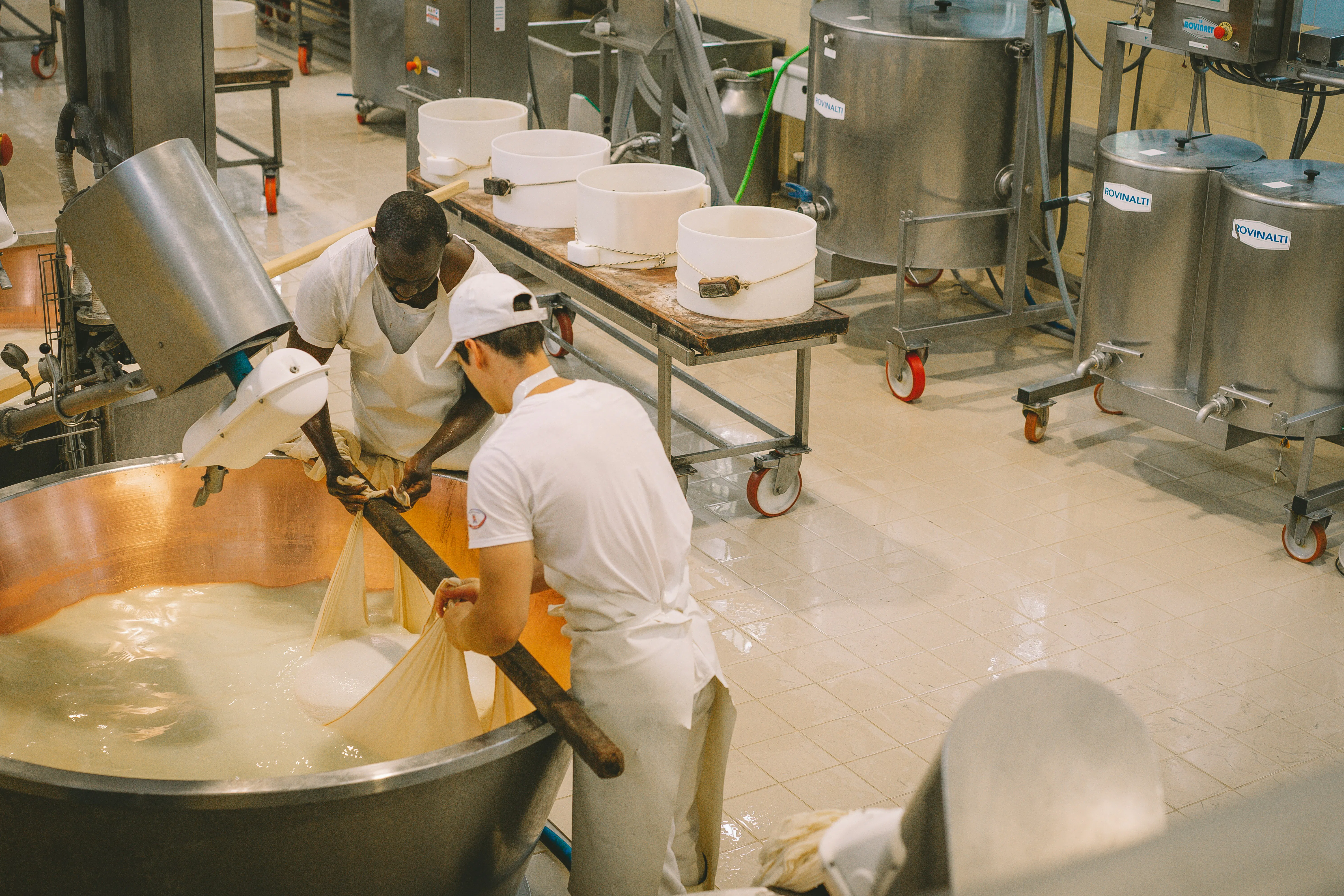
My journey into agricultural sustainability started with a wooden spoon in one hand and a cheese thermometer in the other. I was in my late twenties, working on a small dairy farm in the French Alps, learning to make tomme and reblochon the traditional way. I wasn’t thinking about climate change at the time - I was focused on pH, texture, and the rhythm of animals and land. But something about the simplicity of that system, the closeness between the producer and the product, stayed with me. Years later, when I stepped into the world of sustainability auditing, that early experience helped me see emissions not as abstract metrics, but as part of the same system: the land, the animals, the people, and the choices they make every day.
Since then, I’ve worked with clients ranging from small co-ops to multinational dairy buyers. What’s changed most in the past few years isn’t the science, it’s the pressure. I’ve seen firsthand how climate expectations are reshaping the industry. Companies are no longer just asking, how do we reduce emissions? Now they’re asking, how do we report them with confidence? How do we integrate carbon into our procurement? How do we make credible Scope 3 claims that won’t fall apart under scrutiny? From CSR teams to farm managers, the need for verified data and transparent methodology has become the baseline. This article brings together what I’ve seen work in the field: real practices, real results, and approaches that meet both the environmental challenge and the reporting reality.
I share this story because sustainability in dairy isn’t just about numbers and charts. It’s about people, traditions, and choices made every day in farms and cooperatives. And just like cheese-making, climate solutions are a mix of science, patience, and craftsmanship.
Climate crisis solutions in Dairy Production
Dairy production accounts for approximately 3–4% of global anthropogenic greenhouse gases (GHGs), mainly from enteric methane (CH4) and manure, as well as feed crop cultivation (FAO, 2019a; IPCC, 2023). That may sound like a small percentage, but it’s significant: if dairy were a country, it would rank among the top 10 global emitters. This is why it matters. The challenge is twofold: cut today’s emissions while also storing carbon for tomorrow. Think of it like stopping a leaking faucet (reductions) while also filling a reservoir (removals).
The urgency of climate change requires large dairy value chains to adopt strategies that address its consequences. At this point, reductions alone are not enough - we also need to deploy approaches that take GHGs out of the atmosphere. Around the world, farms and cooperatives are trying multiply solutions to solve these problems, structured around emissions reductions on the one hand, and carbon sequestration on farms on the other. As a consultant, I’ve worked directly with farmers who were constantly adapting to shifting cooperative demands and strict regulations in France. These conversations often went beyond the technical: farmers wanted some sort of reassurance that the investments they were making in feed additives or grazing systems would not only cut emissions, but also meet buyers’ expectations.
1. Feed optimization to decrease enteric methane emissions
Over half of dairy emissions come from enteric methane, the potent gas released during cows’ digestion. In simple terms, cows burp methane as part of their digestion. It’s natural, but it adds up. Scientists are now discovering ‘dietary tricks’ - from seaweed to specialized additives - that can help cows burp less without hurting productivity. Technology is only half the story, however: farmers must also weigh the costs, co-ops set strict rules, and regulators need to be reassured about safety. Change is as much about negotiation as nutrition.
In practice, introducing additives required me to mediate between different stakeholders: farmers concerned with costs, cooperatives insisting on compliance with strict customer requirements, and regulators checking food safety. These dynamics often shaped the pace of adoption as much as the science itself.
2. Transforming manure management
Manure accounts for about 30% of dairy farm emissions, mainly methane from storage and nitrous oxide from land application. Manure is both a challenge and an opportunity: left unmanaged, it emits powerful greenhouse gases. Managed well, it can become renewable energy and natural fertilizer. Digesters act like giant stomachs: they ‘digest’ manure and capture methane to produce biogas for electricity. I once worked with a dairy school where digesters were not just about technology, they were also a teaching tool for future farmers. Training sessions often turned into discussions about risk, financing, and how to convince skeptical family members or co-op boards. Change management was as central as engineering.
But farmers often ask: who pays for the digester? Who manages the daily operations? These are as relevant as the technical questions, and often harder to answer. Even the simpler composting systems designed for small farms require some dedicated effort and planning.
3. Carbon storage in dairy
Beyond reducing emissions, we also need to put carbon back into the soil, like replenishing a savings account. Healthy soils not only store carbon, they also produce better grass and withstand droughts.
The challenge is patience: carbon builds slowly, and benefits might take years to measure. This is where robust monitoring and trust between farmers and buyers becomes crucial.
As an auditor, I have validated and verified projects in this sector, focusing on how soil carbon practices are measured, reported, and verified (MRV). One challenge has always been data management: ensuring that soil samples, farmer records, and remote sensing are consistent. Stakeholder consultations sometimes revealed resistance, especially when management practices demanded long-term commitment without immediate financial returns. These moments underscored the human side of auditing - balancing rigour with empathy and clear communication.
4. Regenerative agriculture in dairy
Think of regenerative agriculture as giving back more to the land than you take. It’s not new, but it’s gaining attention as a powerful climate tool. Many regenerative strategies replace more emissions-intensive practices early in production (i.e. practice adoption) while others result in enhanced carbon sequestration on croplands. Some key actions include planting cover crops and legumes, practicing no-till or reduced-tillage agriculture, recycling composted manure to displace synthetic nitrogen, and establishing hedgerows or agroforestry buffers.
5. Scaling our climate response across the value chain
Scaling solutions is rarely just a technical exercise. It requires trust across the supply chain: between farmers, co-ops, buyers, and auditors. I’ve seen programs succeed not because the practices were new, but because expectations were clear, incentives were transparent, and communication lines were open. The real innovation often lies in how people work together to make climate strategies feasible.
One farm can innovate, but only when supply chains move together do we see real impact. Pilot programs are encouraging, but they won’t deliver sector-wide results unless they’re scaled. For meaningful impact, companies need structured, long-term initiatives across their supply chains. The most effective strategies tend to follow a few key principles:
- First, map suppliers and regions to identify emissions hotspots, whether that’s methane-intensive feedlots or degraded crop zones.
- Second, set clear expectations for near-term methane reductions, such as emissions targets per tonne of milk or meat produced, while also investing in longer-term carbon removal strategies through soil health and crop management improvements.
- Third, track progress using a combination of farm-level data, satellite imagery, and emissions models, ensuring that performance is measurable, reportable, and verifiable.
Conclusions: Twin approach for resource-use-efficient and resilient dairy
Decarbonizing the dairy industry requires mitigation of emissions as well as sequestration of carbon. Beyond methane emissions, which can be rapidly reduced through improved feed and manure management practices, regenerative grazing and crop practices sequester carbon in the soil over the long term.
But none of these transitions happen in a vacuum. They depend on trust, dialogue, and the ability to manage change across diverse stakeholders, farmers navigating strict cooperative rules, companies under pressure to make credible claims, and auditors tasked with verifying complex data. My experience has shown me that success comes when technical solutions are matched with human ones: listening carefully, setting realistic expectations, and finding common ground. Independent bodies such as SustainCERT provide assurance that Scope 3 interventions meet recognized standards, but it’s the people - on the farm, in the cooperative office, and in the boardroom - who ultimately turn strategies into results.
The lesson I carry from years in this field is simple: climate action in dairy is not only about cows, carbon, or kilotons. It’s about people willing to change how they work together.
Beyond dairy, I support companies across agriculture, forestry, and other land use (AFOLU) sectors in designing projects that are compliant with international standards and effective in delivering real climate impact. My work often includes advisory services on Scope 3 supply chain interventions, the development of monitoring, reporting and verification (MRV) systems, and accompanying organizations through the challenges of stakeholder engagement and change management. Whether it’s dairy, crops, or wider land management, my role is to help turn climate strategies into credible, verifiable outcomes.
References