So, how can you make sure you never miss out on an opportunity on Malt? Because yes, letting a quote slip away hurts both your heart and your turnover!
Together with our Malt experts, Antoine (Community Business Partner France) and Marie (Key Account Manager), we’ve compiled all our best tactics for you. From optimizing your profile right through to the final negotiation, this article shares the keys to maximizing your conversion rate, with practical tips from our live FAQ.
Ready to boost your conversions? Let’s get started!
The Fundamentals: Your Profile, Visibility and Mastery of Your Activity
First impressions count - and your Malt profile is your shop window. It should be comprehensive enough to reassure potential clients and help speed up contract signings. A well-crafted profile is synonymous with professionalism.
The Golden Triangle on Malt: Experience, Day Rate and Availability
To establish credibility with clients from the outset, make sure these three elements are up-to-date and consistent:
- Your recent experience: keep your latest projects and experience updated to showcase your current expertise.
- A consistent daily rate: display a clear and stable Average Daily Rate. Once you’ve agreed a project price with the client, avoid making changes during negotiation.
- Clear availability: specify your availability precisely which is a decisive factor for urgent projects.
For a fully optimized profile, we recommend watching our onboarding webinar - you can find the replay here.
How Clients Uncover Their Experts on Malt
When a client has a project, they have two ways to find their ideal freelancer:
- Search directly using keywords (for example, “Java” or “Consultant”) or through the AI tool - Malt's AI Search.
- Ask the Malt teams for help for the most suitable match.
A fully completed profile is essential to appear in these searches, even if you’re not (yet) a Super Malter. The algorithm - just like our team - loves complete profiles!
The Decisive Step: Respond and Convince
You’ve optimized your profile and a project opportunity lands in your Malt inbox. The early bird gets the worm - respond as quickly as possible - keeping in mind that personalization and proactiveness are key.
This is what an opportunity looks like:
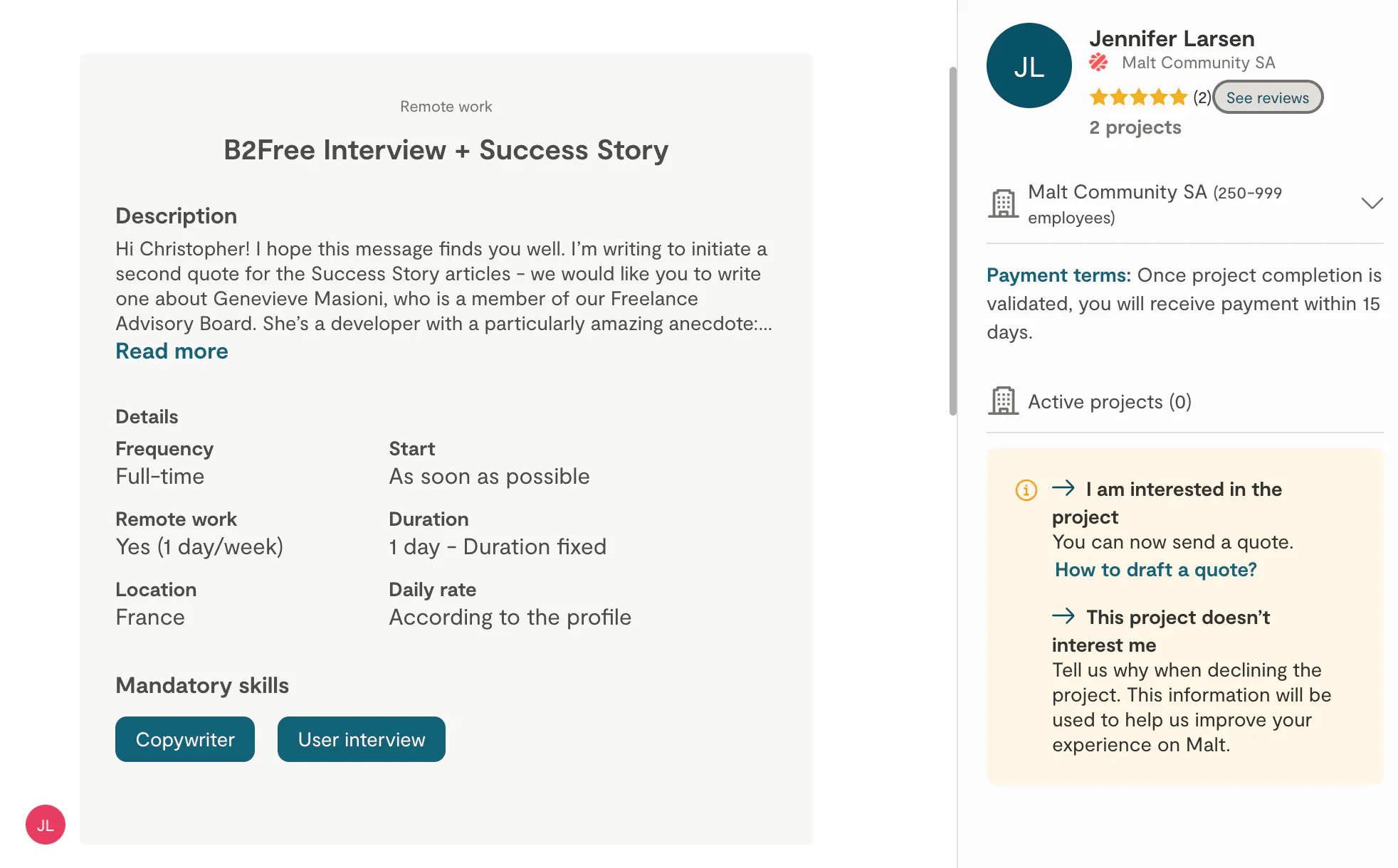
The Application Message: The Art of the “Perfect Match”
If you’re interested in the opportunity, remember that your first message is crucia - it is often where many freelancers lose out.
Beware of the “overly concise” syndrome: 25% of first replies are under 50 word - and that’s simply not enough to convince a potential client. Your goal is to reassure the client and showcase your expertise right from the very first line.
Don't hesitate to highlight key details already mentioned on your profile. Of course, they're visible there, but you wouldn’t want to miss out just because the client didn't notice (or didn’t take time to look).
1. Reassure with expertise:
A crucial tip: act fast! We recommend applying within 24 hours. Don't forget that the client has likely contacted several freelancers, and being responsive will win you points for professionalism (time to be the star student!). If you’re genuinely interested in the project, act accordingly and get a head start on the competition.
Of course, you’re not obligated to say ‘yes’ to every project you’re offered.
If the project doesn’t match your skills, your schedule is too full, or you’re simply not interested, you can indicate this in the messaging tool and turn down the proposal.
However, it’s important that you respond to every client message to maintain your visibility on the platform.
2. Transparency and Professionalism
To instantly reassure your client, prioritize transparency. Be direct about practicalities: your availability date, your daily rate, mobility, and any requested certifications. Sharing this info from the outset builds trust and saves everyone time.
And on top of this transparency, be mindful of your writing. Spelling or grammar mistakes are an easily avoidable barrier. We know how tempting it can be to rush it, but careful proofreading is essential!
One trust is established: time for a call!
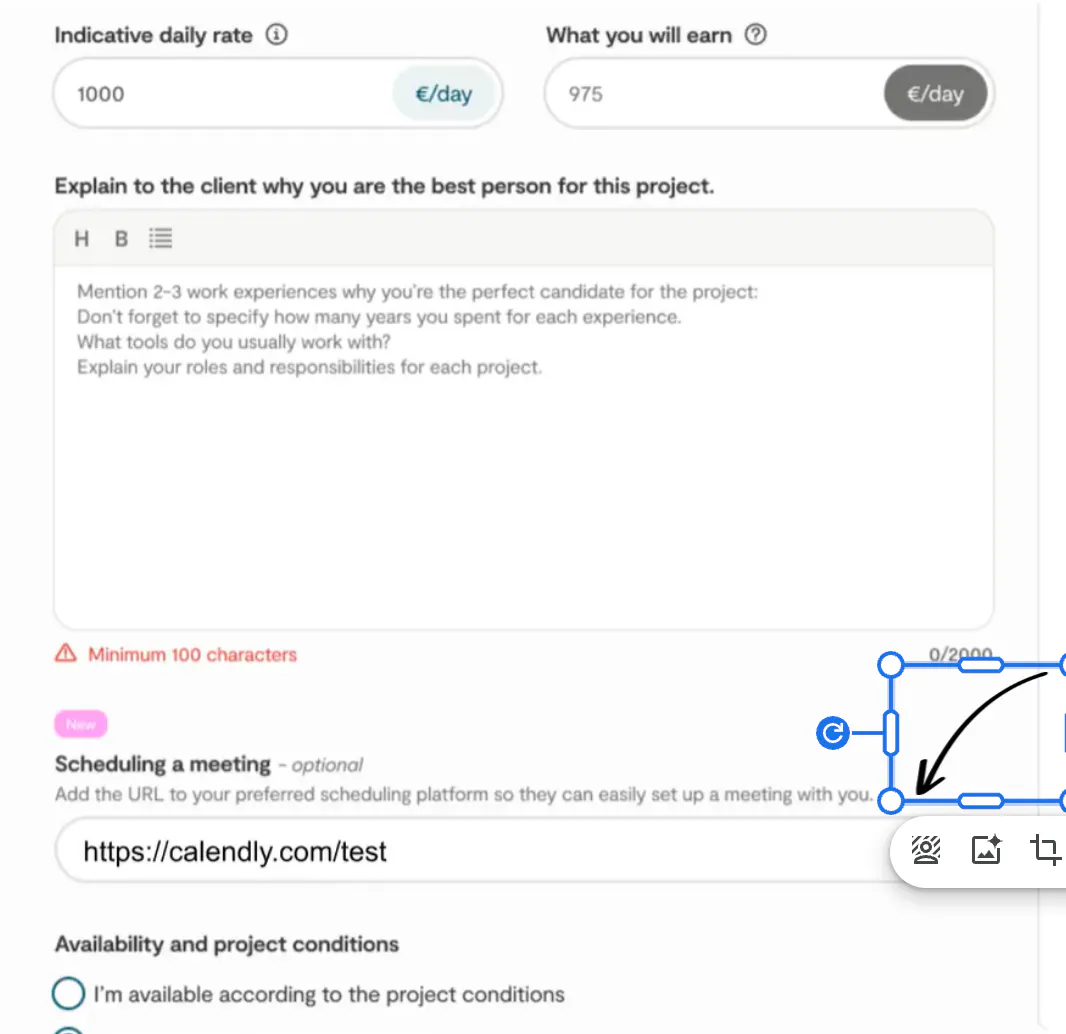
The first message should quickly establish trust. To achieve this, be proactive and offer a first phone or video call. Don’t hesitate to suggest some time slots at the end of your message - it’s your moment to take charge!
💡 Bonus on Malt: you can now add your calendar link directly when applying for a project. Clients can instantly book a time - it's simple, fast, and helps you stand out.
The Quote and Negotiation: Formalizing Collaboration
Preparing for the Interview and Keeping Your Daily Rate Consistent
Before your first interview, come prepared. This is your moment to turn your application into a meaningful discussion. Take time to review the client’s expectations, prepare your pitch, and research the company and your contact’s profile (on LinkedIn). Show them you’re invested!
The crucial point: your daily rate. The client has access to your published rate on Malt, so it's vital to stay consistent when discussing pricing. This consistency builds trust and helps secure conversions.
You’ll find more tips on mastering client interviews here. And if you’d like all our best negotiation tips, we’ve put together our 5 freelance negotiation tricks to give yourself every advantage.
The Four Pillars of a Successful Malt Quote
Have you had your discussions and reached an agreement? Now’s the time to send your quote. It’s the natural next step to your conversation and should be just as precise and reassuring as your application. It should define every aspect of the project to avoid any future misunderstandings:
Always keep in mind that your quote is your contract. The more detailed it is, the fewer surprises there’ll be - and the stronger the foundation for a lasting relationship of trust. Find out more about creating quotes on Malt.
A bonus: you can now reactivate an expired quote directly from your Malt profile.
After Signing: Long-Term Commitment
Signing your quote is the real start of a lasting relationship and the start of building your freelance business on Malt. To help you maintain a steady income, we've made it easy to renew projects (and related quotes) directly from your dashboard. Simple and effective!
And don't forget - the Super Malter programme recognizes your expertise and loyalty.
Super Malters enjoy exclusive benefits to boost their conversion rates:
The era of prospecting is over. Malt gives you direct access to thousands of top clients, putting you in full control of your rates and your time.
However, success on the platform takes more than just expertise - it requires strategy. Every quote request is a chance to build a relationship of trust. By optimizing your profile, tailoring your pitch and submitting a detailed quote, you’ll stand out not just as a supplier, but as a valued partner.
Don’t wait: personalize and be proactive to turn every opportunity into lasting success!
BONUS: The Three Most Frequently Asked Questions from our live sessions:
1. "When it comes to signing a contract with the client, does Malt provide official documentation, or do I also need a separate contract and other documents?" The quote created via Malt is sufficient to formalize the project. Once it’s accepted by both sides, it is legally binding. It’s vital to make your quote as detailed as possible. Find out more.
2. “I sent a quote to the client - it’s been a week with no response. What should I do?” Follow up with the client on Malt 24–48 hours after sending your quote. To avoid this situation, always make sure you’ve had a prior conversation (via call or Malt message) to confirm the project’s viability and build trust before submitting your quote - so you don’t waste your time.
3. “On Malt, I usually prefer to chat with clients before sending a quote (the brief is often unclear). But I'm wondering if that could put off those who expect an immediate quote?” Not at all, you’re absolutely right. Having an initial discussion (message or call) is key. It allows you to clarify the brief, confirm the client’s availability and build trust to start the project on the best possible footing. More information here.